I have recently read that Elon Musk has purchased a bundle of new frequencies from Echostar or Hughes (can’t remember which). Those companies couldn’t figure out how to compete anymore, now that starlink is out there. So they sold their frequencies to Musk.
With those new frequencies, Musk is now building a new Direct To Cell satellite network. This will be an entirely new network and does not refer to Musk’s current DTC system through T-Mobile. Completely new cell phone chips have to be designed and fabricated. New cell phones have to be made and sold. These new phones should start being available in 2029. That system will be a new major carrier that competes directly with Verizon, T-Mobile, and AT&T.
So at some point, there should be one more potential set of frequencies for the Librem 5 to design-in, for a modem. Musks new system will allow the satellites to transmit at a much higher power, thus overcoming many of the current limitations on today’s DTC systems. My guess is that the phones will transmit at higher power too. Most cell phones usually transmit at less than 100mW most of the time. It is practical for a handheld radio to transmit at 5 to 7 watts from a technical perspective with the right built-in circuitry. It’ll be interesting to see how this works out.
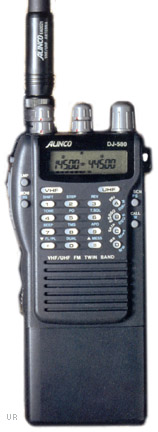
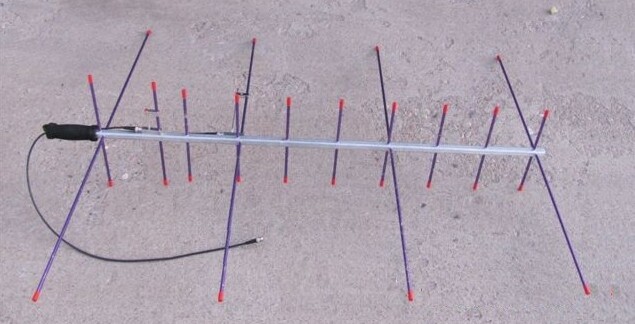
I have done 5-7watts on an amateur radio satellite adapted(140/440mhz yaggis on a stick) handy-talky Alinco DJ-580T with a 13.6v power pack. That thing got hot and it had an aluminum back case heatsinking the PA chip an old 2SC3356. this was my favorite LEO satellite AO-27 AO-27 – AMSAT and below was my setup, I also used a Linux Sharp Zaurus SL-5500 running Petittrack to plan my passes and to hand tune out the Doppler shift more pronounced on the 2M band. I was also able to work AO-51 and the International Space Station’s amateur radio rig back then.
Good work. I think that all of the Amateur radio satellites might be significantly further up than Musk’s system. Many Amateur radio satellites have an apogee of several thousand miles and a parigee in the low hundreds of miles. So a directional antenna is usually needed to communicate with them and you have to know where to find them.
Musk’s satellites have the luxury of being in low earth orbits of as low as 350 miles up, with little to no apogee or pedigree. Some of them are in orbits that are so low that their lifetime will last less than ten years, before they fall in to a quickly decaying orbit and burn up (as planned). Musk’s satellites also have the luxury of intelligent coordination of communications within a whole constellation of other low earth orbiting satellites. So if you can reach only one out of twenty thousand or more satellites from earth, your communication can be delivered efficiently to anywhere on earth, without ever needing to use any earth based communications infrastructure.
It has been a long time, but I recall the satellites I used, except ao-10’s and especially AO 40’s Molinya-esque orbit, were pretty low LEO, AO-27 was 800km but still left a smallish footprint and a minute or two of useful pass, but higher than the 250KM ISS which is just above what I believe are the very low orbit starlink satelites. I guess I need to get a working copy of Kerbal and play around.
I have never worked satellites myself. But as an Amateur radio operator myself, the topic fascinates me. One of the highlights of my ham radio hobby occurred when I had just wrapped up a conversation on an Amateur radio TV ( a two-way television) conversation. My television transmitter only put out one watt of power. So I could only get in to the TV repeater from a near by mountaintop.
As a friend and I were putting our cameras, antennas, transmitter, etc away, I asked myself, “I wonder if I can hit the Mt Lemon repeater (over 100 miles away), from here with my two meter HT?” (from the top of South Mountain in Phoenix AZ). That’s mountaintop to mountaintop. Not only did I hit that repeater, but the guy I spoke with said that my signal was with full quieting. I couldn’t believe it. Then I reduced my transmit power from 5 watts to half of one watt. The guy on the other end said that nothing changed. I got over 100 miles with 500mW in to the repeater on 2-meters with full quieting. I realized immediately that the only way to beat that would be to work an earth orbiting satellite. I never got to that. But some day I want to do that. I am hoping that on the Artemis moon mission, that maybe one of the astronauts will bring along some 2m\440 radios to set some new VHF\UHF distance records talking to other Amateur radio operators back on earth. Just listening in to those conversations would be an exciting event.
But either way, let us know if you work any more satellites.
Maybe so-50 is still working, I have not broken out my kit in a very long time, a very cool thing is if you visit europe you can use the AO-100 it uses a L band uplink so you can find wifi boosters pretty easily and downlink with Ka band stuff ~35000km that. I wouldn’t think there would be much chance catching a moonshot QSL and the moon is ~380,000km off. Plus I wonder if they want a bunch of transmitters aimed at a higher risk than LEO manned mission. Imagine borrowing a big 20-30M TV satellite uplink dish to make that contact. I recall maybe in QST seeing an article of some hams getting permission to use 70cm on the Arecebo dish for EME shots, something you can do (~380,000km x2) on 70cm with a very long yaggi and 100w running WSPR protocol, it uses the time dimension to vastly increase the sample aperature and can reach way below the noise floor but is very slow digital mode.
EME (earth, moon, earth) communications require a brute force approach, because you’re bouncing radiowaves off of the lunar surface (lunar dirt as the mirror), and then back to earth. Even if you aim the beam at the moon, the reflected signal from the moon back to earth would be almost omni-directional, and very weak. So that directional signal from the earth needs to be very strong to begin with. But if we use a small handheld yagi antenna on both ends and a 50W mobile 70cm radio on both ends, that should be more than enough to talk with someone on the moon and maintain an adequate and clear connection without needing any reflection from the lunar surface itself. In fact, 50 watts might be more than is required. In a line-of-sight through the vacuum of space, it probably doesn’t matter whether the signal is going only one mile or 240,000 miles, one watt or less might even be enough for a point to point directional signal.
But on the moon end, the yagi antenna would have to be mounted outside, possibly with an earth tracking system for the directional antenna. Then a coax cable from the antenna would have to pass through an air-tight wall, in to the crew quarters where the 70cm radio would be. These accommodations are probably not at the top of NASA’s priority list. But then again, some hams on the international space stations have talked to hams on earth. I doubt that they are using the space station radio on the ISS end. I think the astronaut packs his own ham radio in to his personal luggage. Somehow, there must be a way for them to plug their radio in to an outside antenna.
OK if they dropped a nice chonky repeater with a big yaggi or dish on the moon with solar or nuke power I might get back to the hobby. I looove building radios and antennas, and I mostly monitor at best and never key them up except for a radio check on something new, then they get put away because there is too often a ham of the sort we both know on the other side, and that is why satellite was nice, short pass might make a contact and zero rag chew possible.
As for brute force the WSPR does that by taking forever and picking up hugely long FSK signals. WSJT-X — Official Home this will blow your mind!
Yeah, I really like the technical parts of Amateur radio. I can spend weeks or months, planning something out and building it. That’s the exciting part of the hobby. Then once it’s completed, I spend a few minutes on the air testing it. If it works, then great. Mission accomplished. I move on to another project. I’ve never spent much time talking on the ham radios, other than doing the testing of what I had built, or to learn more about radio wave propagation characteristics under different conditions.