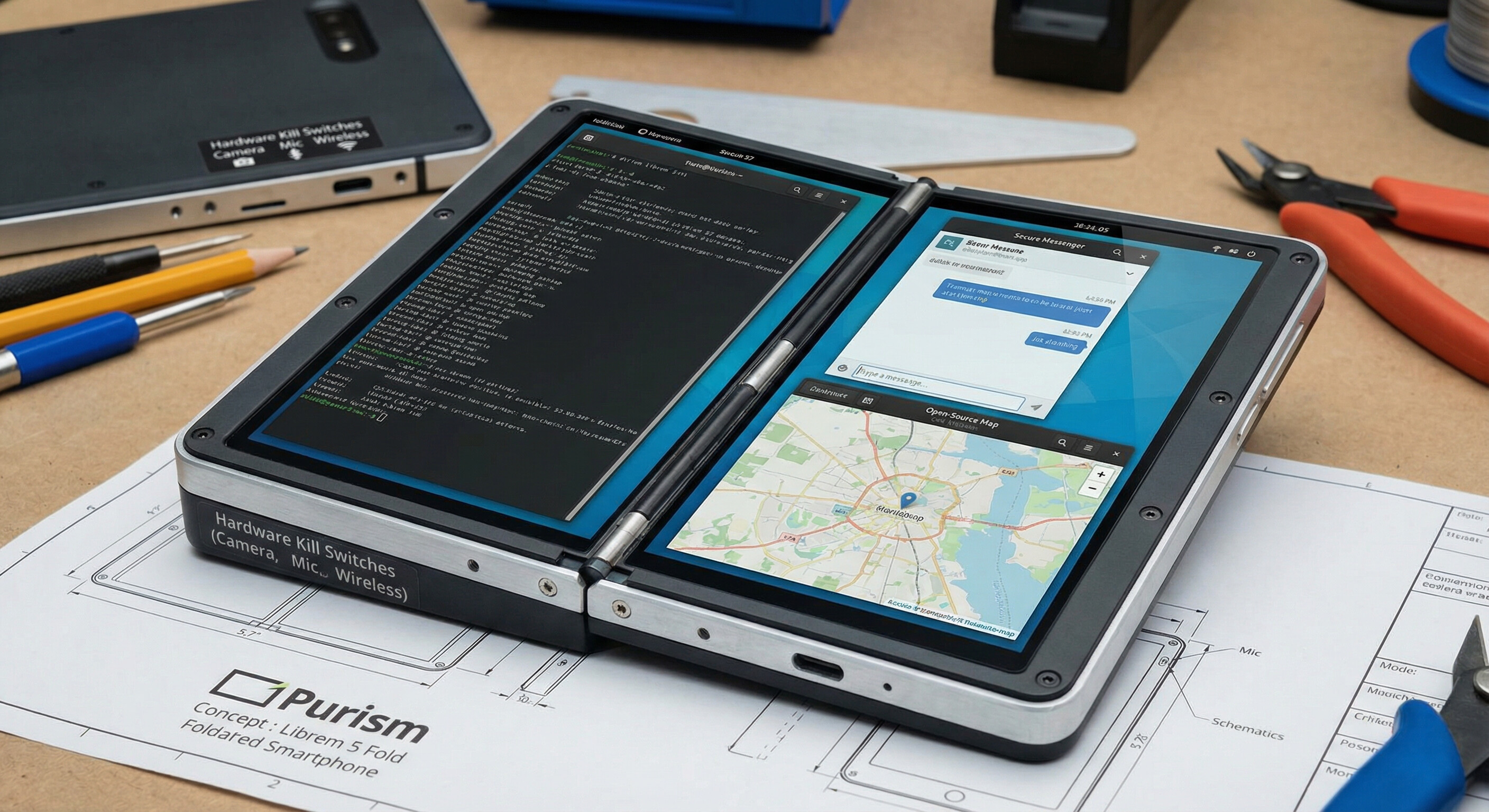
Good evening all, I was wondering how difficult it would be for people with the skillset level of people in these forums to put an Eink screen into the librem 5 but retain all other aspects of the Librem 5 the same? I like the librem 5 but it drains juice quickly and I have never liked LED screens compared to eink screens, except for video. Could someone knowledgeable about what that would entail explain to someone like me who has mediocre levels of knowledge about this explain how one would go about this?
Also if possible could you explain how you would determine what screens it might be possible to use? Is there a processor in the phone whose only job it is to tell the screen what to display somehow?
I assume that you still want to have touchscreen functionality?
I would guess that your challenges would fall into two categories:
electrical
mechanical
For the former, you probably want to start with looking at the schematics. I assume that it is using DSI (Display Serial Interface) but there is more than one version of that.
A safer (and cheaper) option for you to mess with might be a Raspberry Pi, which uses DSI, and should allow you to try out different displays.
If people as knowledgeable as you didn’t know I was going to see how it was done on that eink cell phone that came out a while back, I’m not trying to reinvent the wheel I just need it to work. What was the name of that phone Vin? Van? Something with a V I think, but it was an android and I got the L5 to get away from android, mainly. Trip down the rabbit hole for sure.
I think research is going to have to be the first step. My first thoughts are about the boot sequence and how is the display actually managed and how does Purism have it rigged up. For example if you look at the old tricorder project from back in the day they had a Epson SED1375 display controller that information was routed through, is that how it works on a modern phone, I don’t know.
Or maybe it works more like a PPD file for a printer where you tell the computer what the specifications are for the peripheral and it just makes a minor math calculation for each of ten or so factors, will be a learning curve for sure because I don’t know what I am doing, yet.
The best case scenario for using an eink display is that it would give the same battery life as a phone with the screen blanked. Which in the case of the Librem5 is not great.
One thing I have considered is making a case for a Librem 5 or PinePhonePro that takes 4 or 6 of the 16650 batteries. 16650 cells are cheap and there are models designed to be swapped like AA batteries. Giving case design options for swapping batteries while keeping the case or swapping an entire case full of batteries. AliExpress sells chips for a few dollars that have the USB-C charging functionality and are designed to connect to an array of that sort of batteries.
No doubt you’re correct about the battery life, which is more from running desktop apps and a lack of optimization. It would help some though and I think eink is the future for sure, these LCD and OLED displays hurt most people’ eyes, mine more than most. The modem probably doesn’t help either in terms of power draw.
I like the case idea but my librem 5 is so hot during summer that I would be afraid of it catching on fire with a case unless you added a huge cooling fan to it, but that would draw more power.
The amount of actual code optimisation that can be done probably isn’t that great.
Having a SoC do everything instead of having separate hardware for 4G and Wifi etc would help power use but would go against the security goals.
Getting apps that talk to external services to have a single notification server (as Android does) would help, I think that the KDE people are working on that. But having everyone setup their own notification server instead of just entering their gmail address on Android is a significant extra piece of work.
A case doesn’t necessarily have to make cooling worse. A google search for “cooling case for phone” turns up a number of results, I don’t know how well they work. Some have fans and some just have a design for better airflow.
If you are going to sell a product you can’t have batteries open to the breeze, but if you are making it for your own use then you could do so.
If it will exist kind of Librem 5 version 2 it should be useful to have it more modular with screen substitution too! Easily to substitute LCD/OLED screen with e-ink maybe coloured, maybe with light in canvas that could be turned on in dark places and off in lightly places. It could help Purism to sell more L5v2 and more single components = more money. For example I would be happy to buy L5v2 and use this my L5v1 as emergency pocketpc to carry in my backpack. Moreover allowing more modularity maybe it should be possible, for example, to have replaceable one screen with two screens (I’d like to have it! I don’t care to the weight neither dimensions) that could be added allowing to use one of the two as bigger keyboard, for example! I would be happy to buy it from Purism!