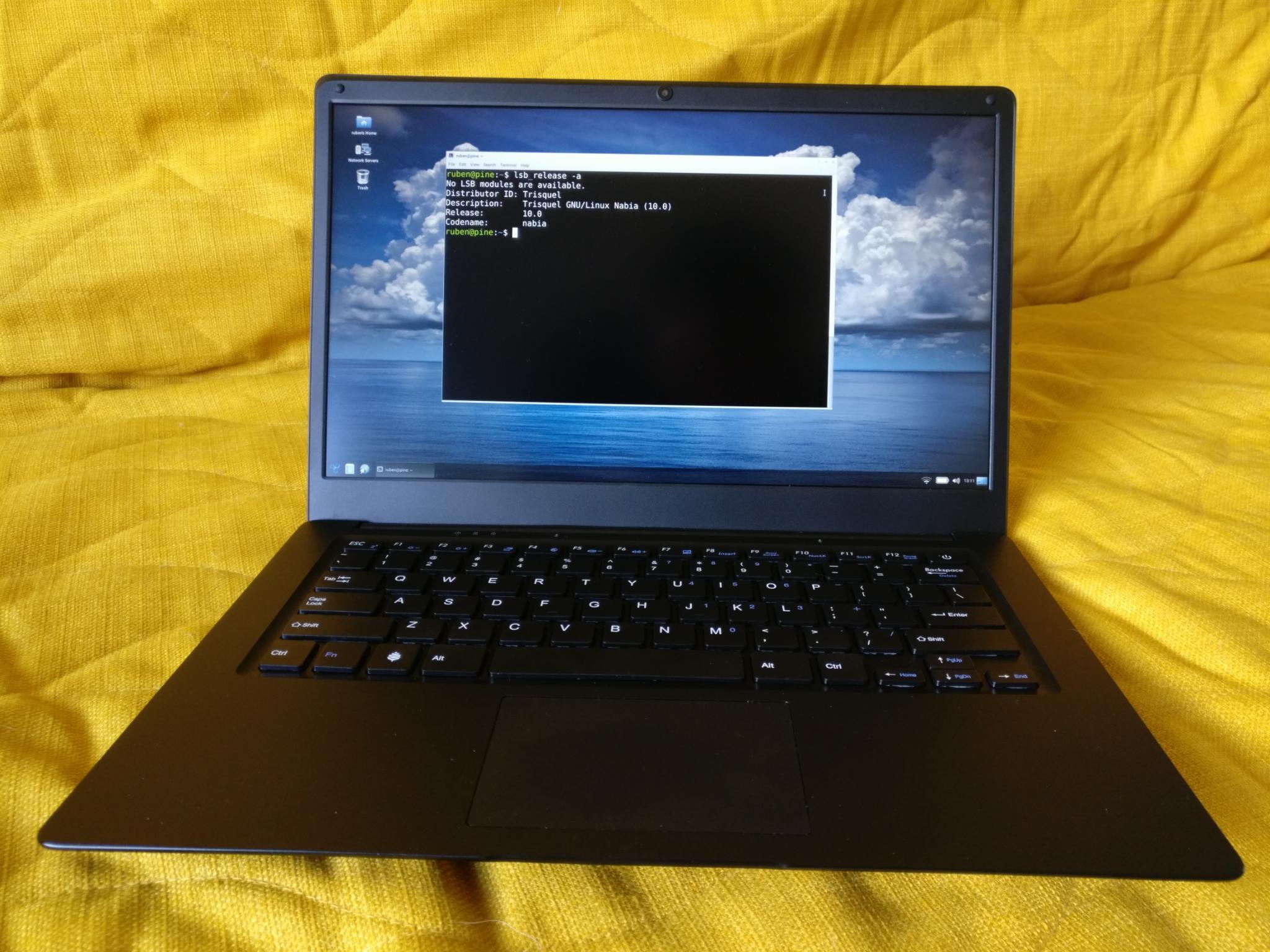
I saw a message that a new version of the Librem Mini v3 is planned for release Librem Mini v2 – Purism. I would buy this mini-computer if I could run Parabola, HyperbolaBSD,Trisquel, Guix with Linux-libre, List of Free GNU/Linux Distributions - GNU Project - Free Software Foundation and optionally GnuBoot instead of PureBoot = coreboot with Heads payload on it. Because GNOME and KDE are bloated projects with a HUGE code base. For example, I want to use XFCE4, LXDE, LXQt or i3wm, DWM.
I could easily disassemble and reassemble it if I needed to replace the memory and other parts, etc.
It should also be taken into account that this is the age of artificial intelligence, and it would be useful for the updated version to have the power to run AI.
To me, the issue you discuss here is not so much about the target OS you plan to use, but more fundamentally about the firmware and boot chain trust.
PureBoot has non-libre binary blobs. What blobs and how many depends on chipsets and CPU generations/architecture. The GnuBoot project states very clearly that:
It is unlikely that any post-2008 Intel hardware will ever be supported in GNU Boot
The problem being that all modern intel CPUs absolutely need at least two closed-sources blobs part of the Intel Firmware Support Package (FSP): one is FSP-M to connect and train DRAM and the other one is FSP-S for silicon init (the rest of the chipset, busses, controllers and so on.) Many more recent architectures need even more FSP blobs (they tend to multiply as Intel wants to grab more control over the basic hardware and firmware features and take it away from end users)
This is not even accounting for the CSME (aka Intel ME) which loads its own firmware from a protected region of the SPI flash and all of this is entirely black box unknown code. This is the reason why GnuBoot cannot boot on Intel CPUs that have an Intel Me SOC - the main CPU will never even come out of reset, ever! (if the ME cannot load and run its firmware, nothing works)
So you are basically restricted to the use of very old architecture CPUs dating 2 decades ago…if you adhere to the very strict ethical choices of GNuBoot and the respected FSF.
In conclusion: why would you want to purchase a Librem Mini 3 featuring a very recent powerful CPU, if you cannot use PureBoot for defense-in-depth root-of-trust tamper detection? And as stated above, there is no way you can make your new Mini power on without having many (and more) proprietary binary blobs in the boot chain and even below in the hardware features designed by Wintel for your “best security” and totally “security by obscurity” concepts.
This is unfortunately the state of things in 2025: either you accept the use of “some” proprietary firmware blobs or you have only a choice of decades old outdated hardware…
I like how you explain things logically and clearly. Yes, you’re right, Purism is a compromise today. But there are interesting improvements, such as the PineBook Pro (arm64). It’s still weak hardware, but it’s better than what we had in 2008 in terms of hardware.