Hello! Happy Holidays! I’m interested in finding a good inexpensive color printer (jet), scanner, fax, etc for my Librem 14, that is privacy honoring, whose ink cartridges last a while. Any suggestions? Would love it if I could hear any suggestions before midnight central, while it’s still “Cyber Monday” or after ( : Thank you!
1 Like
My household uses a Brother DCP-L2550DW with the TN-760 High-Yield Toner Cartridge, which is estimated for 3,000 A4 pages. Other Brother printers with colour capabilities, along with their respective cartridges, will likely be sufficient for your use case.
1 Like
What specifically does “privacy honoring” mean in the context of a printer, and do you have information to share regarding the privacy properties of this printer? Most printers are simply opaque regarding their privacy.
For example, I run my own DNS server and I can see my printers doing periodic DNS lookups, which is often a bad sign from a privacy perspective.
Hence, if you don’t need to use the printer from outside the local network and you aren’t too bothered about having the printer update its software, you might want to deny the printer all access to the internet.
2 Likes
The household printer itself is monochrome, so it does not strictly satisfy the full criteria. However, I do know a few things about it:
- No proprietary drivers required for usage over LAN with Linux.
- Ink cartridges last a while.
The printer is mostly used for schoolwork and monthly employee payrolls, and the ink toner cartridge just got replaced today after being sporadically used for over a year.
1 Like
OK, fair enough. I interpreted the question as being more about the printer itself.
An anti-feature as far as printer privacy goes is any printer that has a hard disk on which print jobs are queued i.e. internally to the printer. However that is generally incompatible with “inexpensive”.
1 Like
At the moment, the household printer is configured and connected to the LAN using Wi-Fi, but it also has a USB-B port in the back that can be used for printing via USB cable as well, so it is possible to avoid potentially exposing printing jobs to the LAN by only using the latter method instead for improved privacy.
1 Like
Pursuing that further … when I jump on one of my printer’s management pages, it is accessed via https - hence good that it is protecting stuff from exposure to the LAN but bad that it’s a self-signed certificate.
Edit: It is possible to put a real certificate on the printer but I haven’t bothered. So I guess the capability of doing that is useful from a privacy perspective.
1 Like
It is better to have a self-signed certificate than no certificate at all.
1 Like
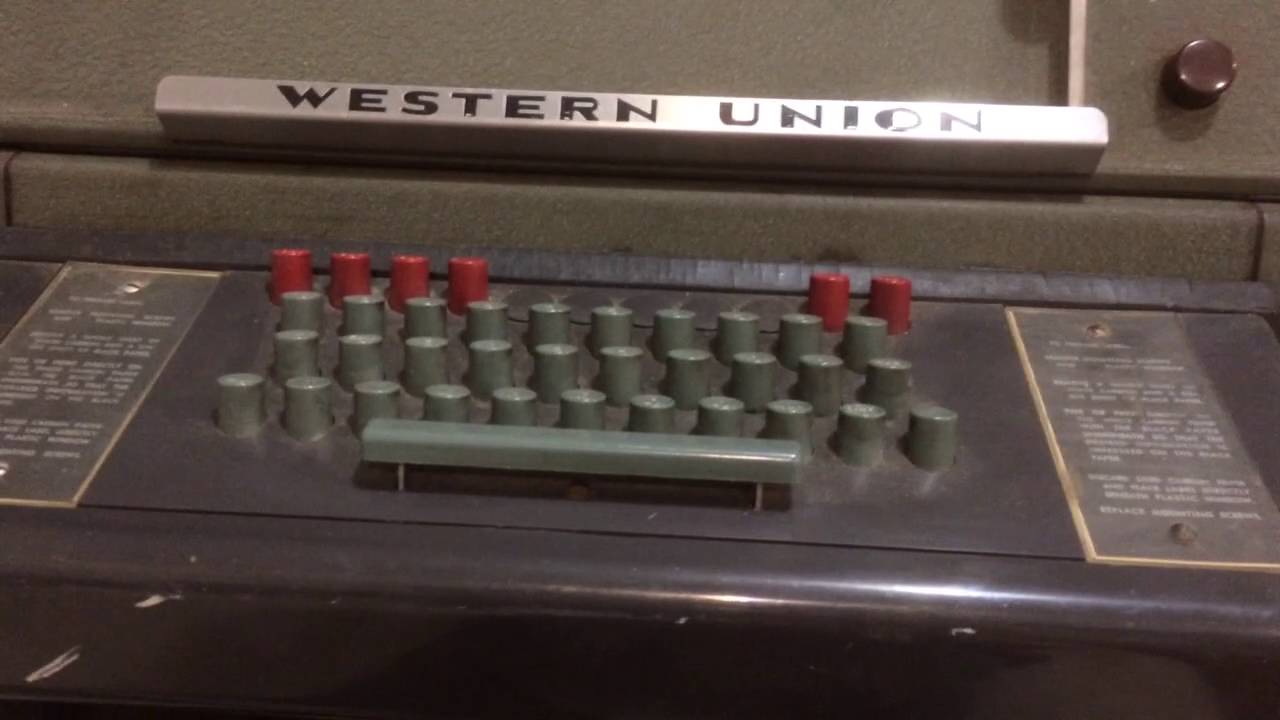
Teletype Model 28 ASR!
(Just use your audio jack and a demodulator.)
1 Like
Let’s broaden this a bit: printers are known to print identifying marks on prints (yellow dots) it seems unconfirmed that there is something similar used in laser/grayscale as well. And I’m not sure if this is still going on (a bigger thing about this was around a decade or more ago). See: Printer tracking dots - Wikipedia At the end of that article there are a few links to countermeasures, but I’m not sure how user friendly those are to implement. The Instructables/EFF article is good too: https://www.instructables.com/Yellow-Dots-of-Mystery-Is-Your-Printer-Spying-on-/
4 Likes
Same links on my WIkiless and Structables instance:
1 Like
Since some still need non-digital means to convey information: Open printer is coming. Background article: https://www.techspot.com/news/109674-open-printer-fully-open-source-inkjet-drm-free.html
Print Specs
- Black & White: 600 dpi
- Color: 1200 dpi
- Printhead compatibility: HP 63 (US), HP 302 (Europe)
- Ink cartridges: use only one (black or color) or both (black and color), refillable
- Speed: TBD
Supported paper formats
- North American letter, tabloid, and 11-inch wide paper roll
- European A4, A3, and 27 mm-wide paper roll
Processing
- Main board: Raspberry Pi Zero W
- Cartridge board: STM32 MCU
Interface
- Display: 1.47-inch, 172 x 320 TFT LCD
- Button: Jogger wheel
Connectivity
- USB Type-C (computer)
- USB Type-A (for USB mass storage device)
- Wi-Fi 802.11ac
- Bluetooth 4.1
Power: 24 V DC supply, 2.1 mm DC-in jack
Compatibility: Windows, macOS, Linux, Android, iPhone (uses the CUPS open-source print server)
Dimensions: 50 x 10 x 11 cm (19.7 x 3.9 x 4.3 in)
Open Source
Open Printer will use the Creative Commons BY-NC-SA 4.0 license for all of its files, including electronics and mechanical design files, firmware code, and the bill of materials. We hope that people will be able to repair, upgrade, and contribute improvements to their printers.
5 Likes
A dot matrix from the 80s?
1 Like
When I need to print, since my Librem 14 can’t talk to any of the printers, I use a nearby Windows computer, print, then go back to using a good computer.
1 Like
It is important to recognize that the BY-NC-SA 4.0 license is not a Free Software-compatible/open source license because it restricts others from selling the software, which is an important part of both definitions.
This license does not qualify as free, because there are restrictions on charging money for copies. Thus, we recommend you do not use this license for documentation.
In addition, it has a drawback for any sort of work: when a modified version has many authors, in practice getting permission for commercial use from all of them would become infeasible.
Even a vendor like iFixit would probably not be permitted to sell replacement parts for this printer as it would violate the non-commercial terms.
This also does not guarantee that the cartridges will remain compatible if the vendor (HP) implements DRM.
2 Likes
A real pity that they didn’t just do plain paper.
A printer is only as good as its weakest link as far as repairability and longevity is concerned. So obtaining the rolls, which presumably won’t be available at the supermarket when I get a ream of A4 paper, could become the limiting factor.
(… in addition to what is noted above about ink cartridges - although I think the intention is that you have one working ink cartridge and then refill it.)
Maybe the next model …
1 Like
Thank you ( 
1 Like
Regarding a an impact printer from the 1980s’. Suggest a HP2563B (or A or C) printer. They came with Contronics Parallel, HP-IB, or RS232 Serial Interface (a DB-25 connector).
300 lines per minute, 132 char wide, fanfold paper, even multipart.
You can find them on the used market, nearly indestructible.
Printer ribbon part number is HP2608A.
Service manual below:
2 Likes
@irvinewade the specs say: “European A4, A3, and 27 mm-wide paper roll”, so normal sheets too.
@gondolyr I wonder if they selected those cartridges precicely because they are plntiful and copies exist, so drm is unlikely. If/when HP discontinues those, then there is somekind of EOL clock, but even then there are refils (as long as printer heads last). I wonder if the license thing is them wanting to be the sole commercial source - users having the freedom to use commonly available parts to fix but keeping any creep copycats from making a mint, which could kill the idea too.
1 Like
They say it can print sheets. I assume you have to feed each sheet yourself, which would be OK with me for small documents. I think that the small footprint is a plus
I can’t tell whether the printer does the cutting when printing to a roll.
2 Likes