As a software developer, I am most likely going to lose my job to AI.
A few weeks ago after getting through airport security, I asked the AI to make a video game for my Librem 5.
My workflow is simple:
ssh to a rented VPS from the Librem 5 terminal
use sudo -i on the VPS to enter root shell
use tmux so no work is lost if my connection is flaky or I disconnected
use an AI harness like claude code, or codex or whatever you prefer
Type into the text box to make me a game, using a technically unskilled rant about what I want
Reconnect after taking a break, reattach tmux, check is finished, then copy down the result to the Librem 5
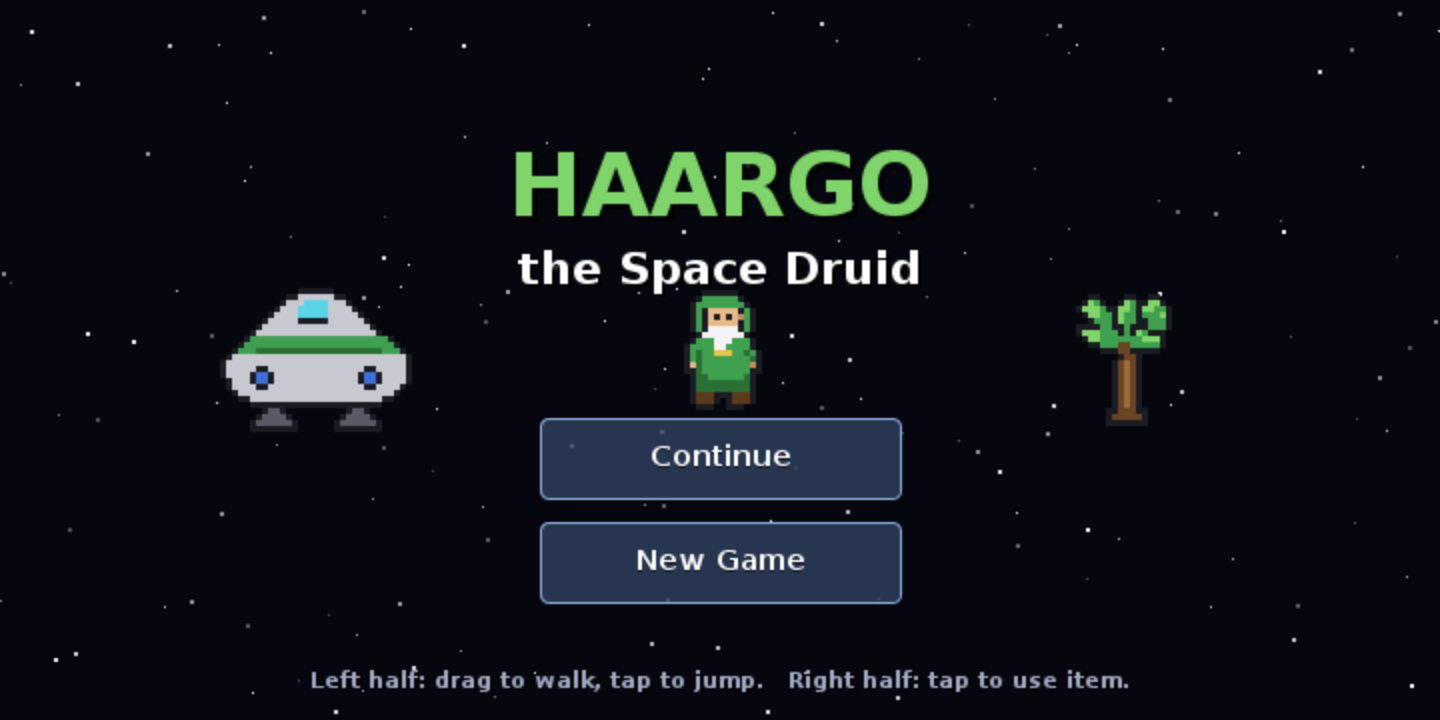
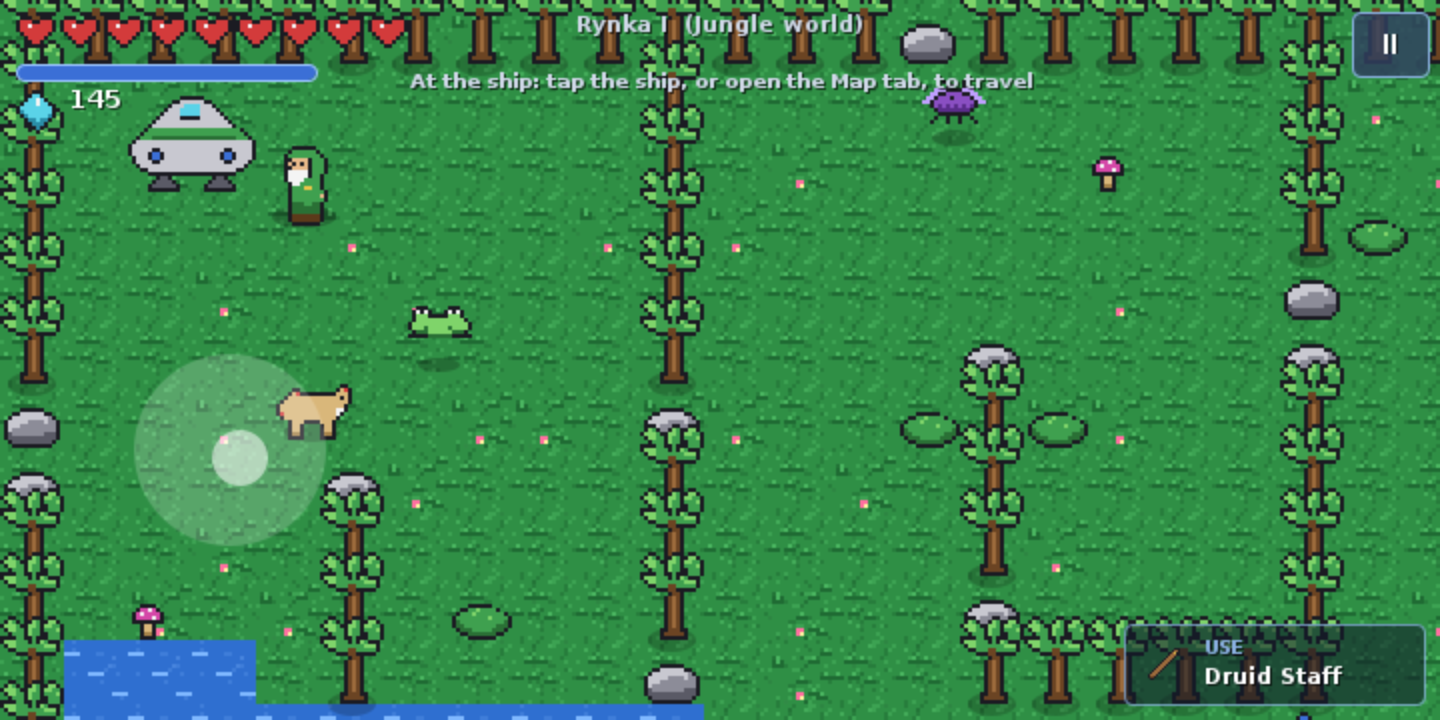
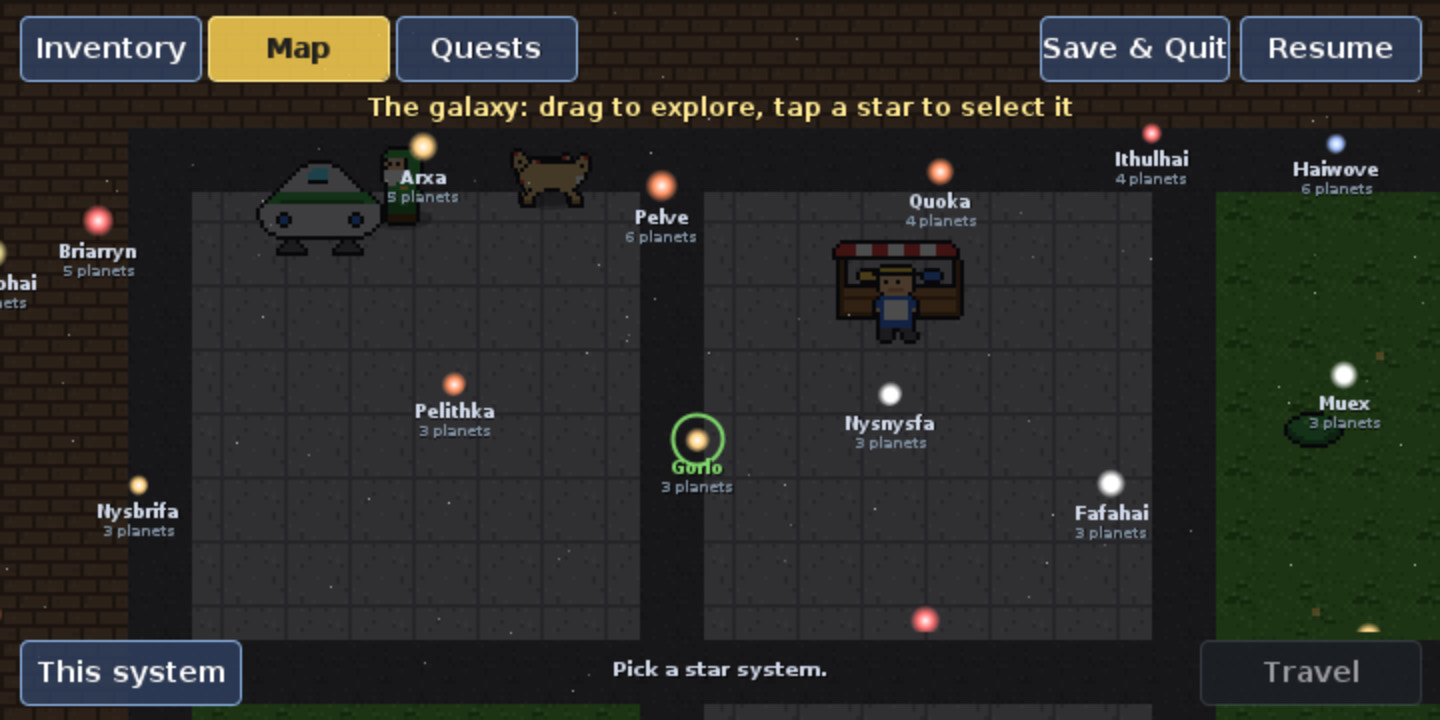
And this is how games like Haargo the Space Druid were made. I told the AI the game should be a bit like Zelda with combat and hearts and gems as a currency, but a bit like minecraft where you can craft using wood from trees – and the world state is stored so you can build. And a bit like No Man’s Sky or whatever with infinite planets to travel to, although I haven’t personally played No Man’s Sky.
It plays with two thumb controls almost like one of those sideways gameboys, and includes space adventures collecting mushrooms, befriending alien dogs, and all sorts of other stuff exactly fitting my description and rant that I fed to the AI while I waited for my airplane flight.
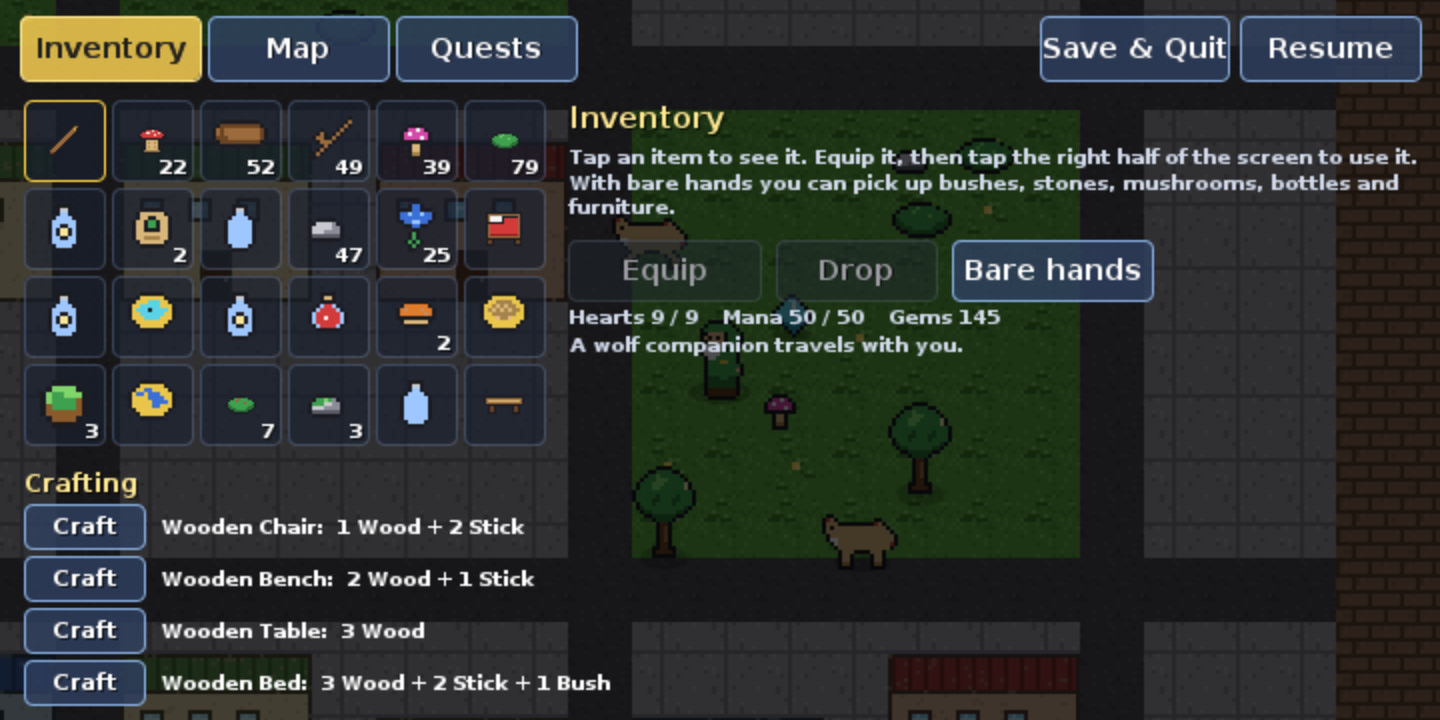
It has an inventory system, allowing the player to craft stuff, place it into the world – persistently across the lifetime of the process, so you can decorate building interiors in city-planets.
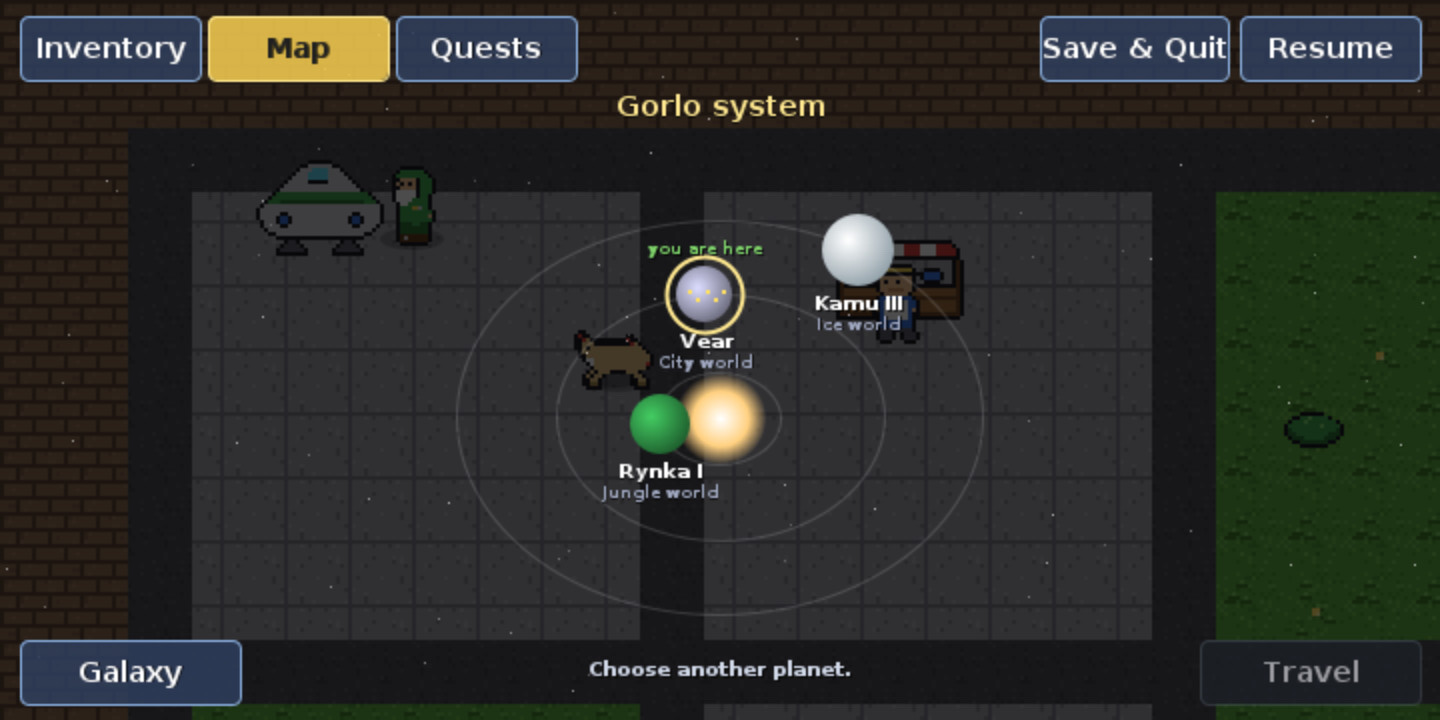
And, it allows zooming out to the galaxy wide map of all star systems. They seem to generate out indefinitely, and the activities on any world persist to the eMMC.
This was like one or two prompts in one of the leading models. The model barfed out all the game graphics, all of the necessary software, all of the game’s audio and combat sounds, and whatever else.
I’m not bringing this up because it’s some moral good. I have the source code of Haargo the Space Druid and would obviously happily share it. Given that it’s something “I” made in a foreign country with a long, winding English ramble in half an hour on my Librem 5 while waiting for a plane flight, I don’t feel a lot of attachment to it in terms of software ownership and I have no financial interest in trying to profit from its existence. Of course, I also don’t have a way to verify where the AI model got its training data or what percentage of these graphics are a amalgamated ripoff of past human activity rather than “novel invention by AI” (which I know at least some users of this forum do not believe exists).
But the reason that I do mention it, which may at first seem off-topic although I hope you see it is not, is that after being faced with coughing up “Haargo the Space Druid” in half an hour the existence of these AI systems is actually rather demoralizing with respect to usage of IDEs or particular frameworks.
Not to be rude, but how do I motivate myself to learn your exciting new framework if I can just snot out software for the Librem 5 regardless of how it is written by describing what I want?
You might be thinking to yourself that in this situation, I’m the problem. That’s a fair concern. But I think this is a problem that upcoming generations will increasingly face as time goes on. Because there’s all sorts of 2D interface logic going on in the inventory systems of Haargo, probably, I think (don’t know, didn’t bother to read it). But rather than making that in GPUI or in Rust (maybe – I forget what language Haargo was made in, although I’ve a vague recollection it was either Python or Java) my language of choice for this app was “snotted out english word soup” and we’re really getting to a point where that’s a very effective programming environment. And I don’t know what to do about it!
Ya, as the saying goes, my favorite programming language is now English.
There’s efficiency of writing the apps and the efficiency of running the apps. Back in the day, I just did everything in Python (well, really back in the day, in perl), but now rust seems to be the hot language, with justification. It’s way faster than Python and (presumably) more secure than C.
So if I’m just going to tell some AI to crank out an app, why do Python Qt when I can just say “rust plz with gtk4”? Or, if this newfangled framework is better, why not “rust plz with GPUI”?
If we can basically use any framework and don’t even really have to learn any of the details anymore, we can just pick whatever will be the fastest running framework now, targetting the device not the developer.
For programmers, I think the future will be more in project management and less in actual code. Even getting LLMs to write code takes a lot of management and coordination, no matter how good they get. Perhaps the distiction between programming and coding will become more distinct. The progammer will work at a higher level and the coder (LLM) will do the actual coding.