The cool thing about Reticulum is that it needs practically zero configuration. On a PC or Android device you can run this client and it establishes a private and public key much like a cryptocurrency. You share your public key on the network (to which level you can decide, you might just want to share it with only people you know) by sending out an “announce” message. This is then broadcast to the level you prescribe and then the receiver can add you and you can communicate with text messages or even PTT (push to talk).
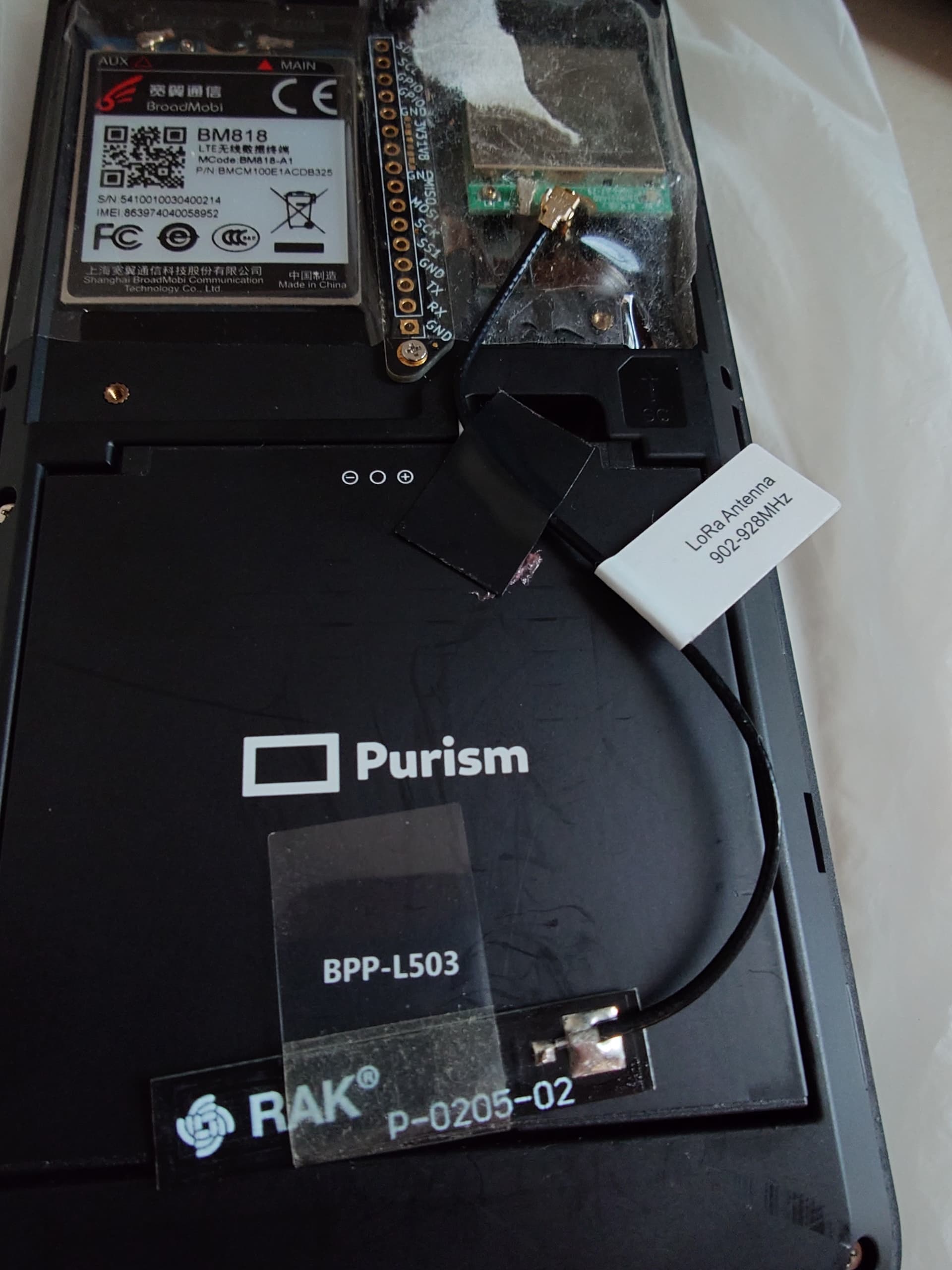
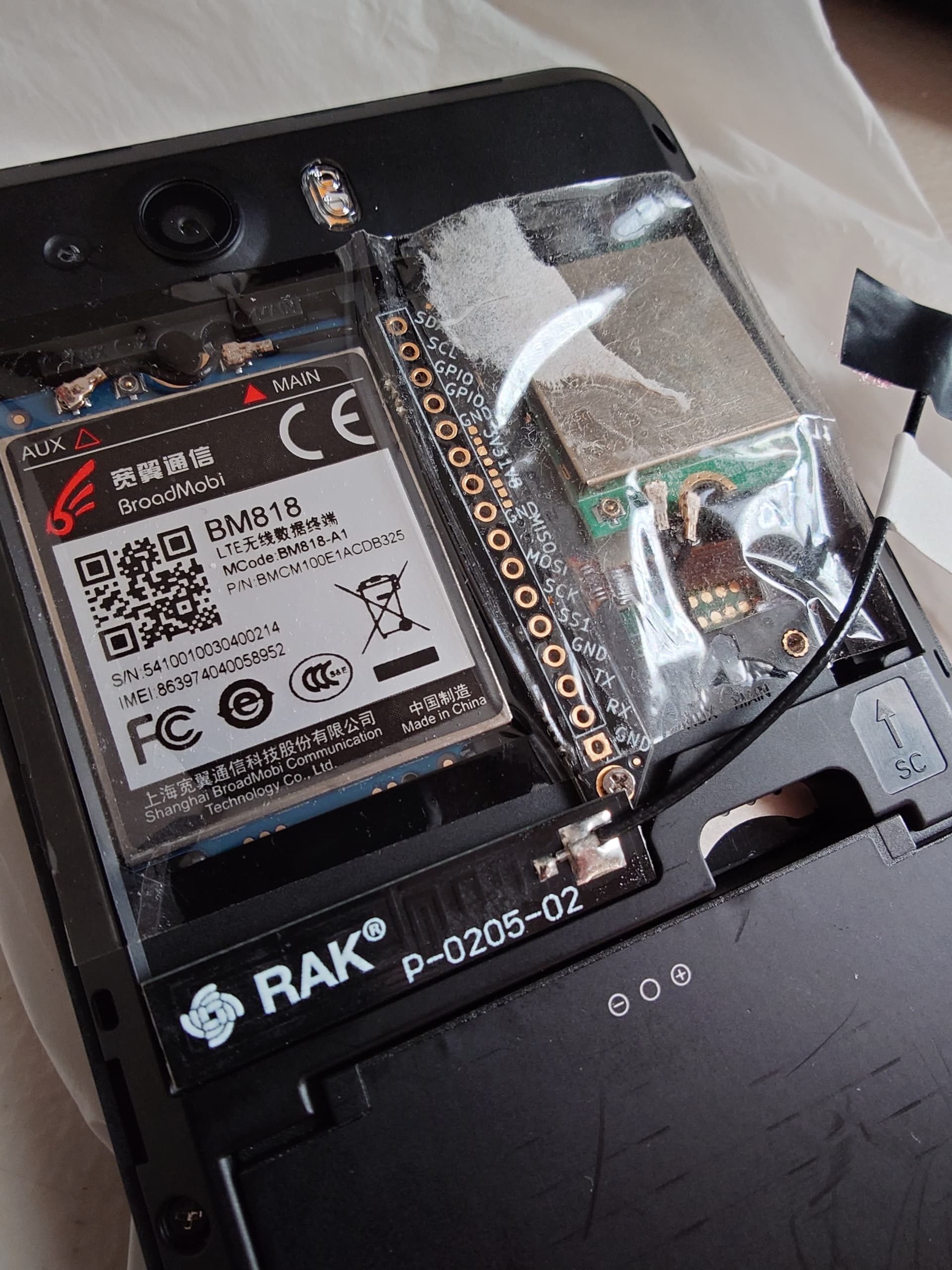
As I stated, it’s network agnostic. It will use a TCP/IP connection, a serial connection to some radio device like a LoRa network (Meshtastic), your home WiFi, etc…it doesn’t care what transport it uses, it will use whatever is available. The idea here is that you can use your data connection with the BM-818 on the cell network as well as the WiFi modem in the L5 to run your Reticulum node on it and you can take part in the growing network of users. The big problem with Meshtastic is that it is only using LoRa radios which is a distributed network of people that are running them but if you don’t have another user nearby within radio range you can’t establish communication outside of your own personal network. With Reticulum you can use whatever is available. For example, locally you could outfit your crew with LoRa radios to communicate outside of the Big Brother network, but then you can also bridge to another community around the globe on the internet with powerful cryptocurrency levels of encryption. Its literally the beginning of the rebellion against the digital prison that is being constructed for us.
I invite you to check it out because it’s a very powerful concept and there are more and more people exploring it all the time. I see it like the way Nostr started, and now it’s starting to pick up steam and lots of people are using Nostr now as a decentralized social media. Likewise I think this stack has a really good chance of establishing itself as the decentralized messaging that is really in the spirit of what the L5 was created for.
Be mindful that this is a meaningless statement. A high level encryption (against classical computing) is a sufficiently modern algorithm for asymmetric crypto used in transport (as opposed to symmetric used for data at rest cases) with proper protocols.
To get something actually even more high level and future proof, you need to use PQC algorithms (ML-KEM/Kyber), as there is the possibility that someone could be recording the encrypted channel, but the risk of decryption is still 5-15years away - at least - so it may not matter. Reason for not using PQC-algos by default is, although there are already open implementations available, that they are computationally heavier and can make the responsiveness a bit sluggish on less capable devises (although, looking at the old Purism demo video, it doesn’t seem that bad on L5, but I have no idea how those fare if implemented in reticulum network and hub).
For more information on PQC risk, look at Shore’s algorithm - the reason why current asymmetric encryption and network traffic is in danger, as well as HNDL threat (harvest now, decrypt later) that comes with it - basically the risk has been with us for maybe a decade and it’s now about how fast are the important parts of systems and networks updated to use ML-KEM (formerly know as Kyber) as EU and US and others are planning on deprecating TLS1.3 by 2030.And as for note on data at rest, there is Grover’s algorithm that should half the effectiveness of symmetric encryption (but as things advance, doubling the keys as a countermeasure may need to be doubled again- causing again heavy computing and bottlenecks). But it’s all kinda theoretical risk management now as there isn’t going to be a capable enough quantum computer (enough cubits with good enough quality) for a looong time - another cycle of about as long as L5 has been around already (which may be long or not)…
That being said, I like reticulum. I’m just not sure if there is enough cross platform support - it’s still a bit niche and I haven’t seen anyone with Android having any app that uses it (although my sample size is miniscule). What apps do you recommend for it in different platforms (mobile and desktop)?
Reticulum looks really interesting. It seems to tackle a very similar issue as the transport and core layer of GNUnet do. There are some differences though in a way that GNUnet separates this transport of messages and its cryptography from the application level. So chat applications will use different key pairs with the advantage of replacing your keys later on, even to upgrade cryptographic strength without resetting the identity validation in a group chat with other members. So you don’t need to go around and verify keys from your contacts via side-channels as often.
On the other hand I think GNUnet is less practical in current state since there have been made changes to the transport and core layers in recent years which still need more testing.
I’m personally just working on the messenger service which is far more high level. But effectively it already provides a somewhat usable distributed group chat functionality which Reticulum stills seems lacking. Interesting to see how it’s proceeding. Definitely nice to see that they have some funding for this project.
I think the quantum computing threat is total FUD at this time. But I hear what you’re saying. There is an Android version of Sideband that I have loaded on a couple old phones and have successfully tested using my home wifi and some LoRa radios connected via Bluetooth successfully. The push to talk is kinda fun, like when I was a kid messing around with walkie talkies.
I haven’t tried using sideband on the L5 yet but presumably I could just connect to my Heltec and Lilygo LoRa radios using Bluetooth. I’ll let you know how I make out with that. Actually can also just connect with USB as well.
I think that is a slight simplification. My supposition is that asymmetric crypto is used in the handshake to exchange a random symmetric encryption key used for the session. So if the asymmetric crypto is later broken via a QC applied to HNDL data then the symmetric encryption is likewise broken. However asymmetric crypto is really only needed between unrelated parties. Between some of my own computers I use symmetric encryption directly, which may be more robust against this specific kind of attack.
It is, to the extent that it’s indeed possible to set up that kind of symmetric encryption if you have a way to share the key. Then it’s a bit safer but still then comes under Grove’s, which optimizes brute force and doubles its efficiency (at least, in theory, as the Q-comp doesn’t exist yet). In that case, and with a simple setup, (at least) doubling key size should be sufficient counter measure and not even be practically too slow.
FYI I installed Sideband on the L5 using the Debian instructions and it works flawlessly. If you have a couple old android phones, load it up on them and the L5 and you can mess around with it. By default the system connects to a public propagation node so if you go into the announce stream you will see a ton of annoucements from other nodes. If you go into preferences you can give your phone a unique name other than “Anonymous” which makes it easier to find your other node in the stream. Or you can just find your unique LXMF address in preferences and add it manually to the other phone by selecting “Conversation” and setting up a new convo with that address. I have done the push to talk voice but haven’t played with the voice call function, but supposedly it will do voice calls. Don’t know how well that would work over a LoRa connection but certainly on the cell network or through your WiFi it should work pretty well I would think.
Good sources for HaLow and comparisons to other standards: Introduction to Wi-Fi 802.11ah HaLow - Argenox and https://www.rtl-sdr.com/tag/halow/ range is around 1km (compared to LoRaWan 15km) but has up to about 15Mbs of throughput (compared to 50Kbs of LoRaWAN) etc. Also note that the freqs. are not universal in different countries: *Wi-Fi Halow uses the 750 MHz to 928 MHz range, though 863-868 MHz are used in Europe while 902-928MHz is used in the US [for example]" and that sub-1GHz should give good penetration.
But the question was: what’s the name, make and model of that m.2 card - where did it come from and how much was it? Did you get it to work?
[@irvinewade for a bit of housekeeping, this HaLow conversation should be split away from this thread - pls and thnx]